Extraordinary Individuals: #CentersHeroes
A message from CEO, Kenny Rozenberg, to #CentersHeroes:
Our thanks—and our hearts—go out to you.
I’ve never been more proud of—or awed by—the Centers Health Care teams across our network and throughout our facilities. At this critical time, in the face of the COVID-19 pandemic, all of you—administrators, therapists, nurses and nurses aides, social workers, hospital liaisons, receptionists, recreational, food and cleaning staffs—have stood up and met the challenge head on. You are the best. You are the bravest. You are Centers Heroes!
Watch our #CentersHeroes in action.
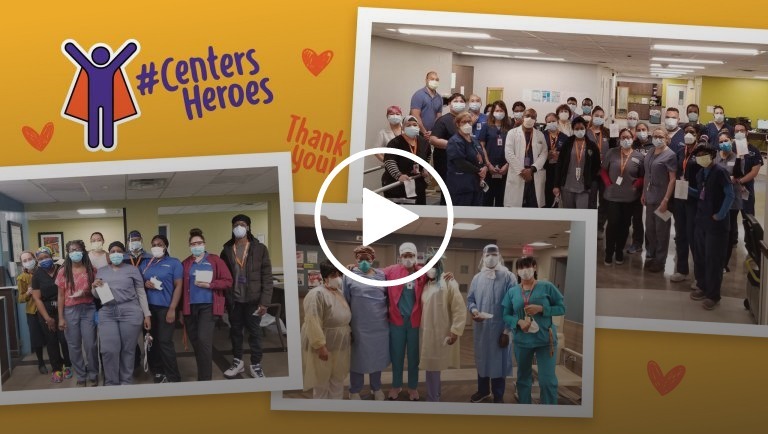
Every day, without fail, you demonstrate the courage to step up—and the commitment to safeguard the health and wellbeing of our patients, residents and your co-workers. The world is changing. You are not…because I’ve seen it with my own eyes: you have always been steadfast in your dedication and courage.
I want to highlight a #CentersHero, Shellan Robinson, LPN at Ellicott Center. “I love what I do. I can’t think of anything more rewarding than being a nurse: taking care of people in need, easing their pain, comforting and engaging them. In the last several months, with the arrival of COVID-19, we have experienced dramatic new challenges in our work. But one thing remains the same: I still love what I do.” Click here to read more
Shellan’s story is just one of many—stories of the unsung heroes throughout Centers Health Care. We honor you. We salute you. We thank you from the bottom of our hearts. You are our heroes.
Our partners at the Buffalo Sabres also recognize and salute our #CentersHeroes. Goaltender Carter Hutton, sends a shoutout to you all:
“On behalf of the Sabres, I want to say thank you to our friends at Centers Health Care. You show up every single day to help prevent Covid-19. Your support is great for the community. Thanks for keeping us safe.”
Watch the full video of Carter here
I know this is not easy—for you or your families. The pandemic may in fact be the greatest challenge you ever face. But you have proven by your every day actions—by your commitment and your compassion—that you are up to the challenge.
I want to join the Sabres in thanking every #CentersHero…as well as all healthcare workers and first responders on the frontline of the COVID-19 pandemic.
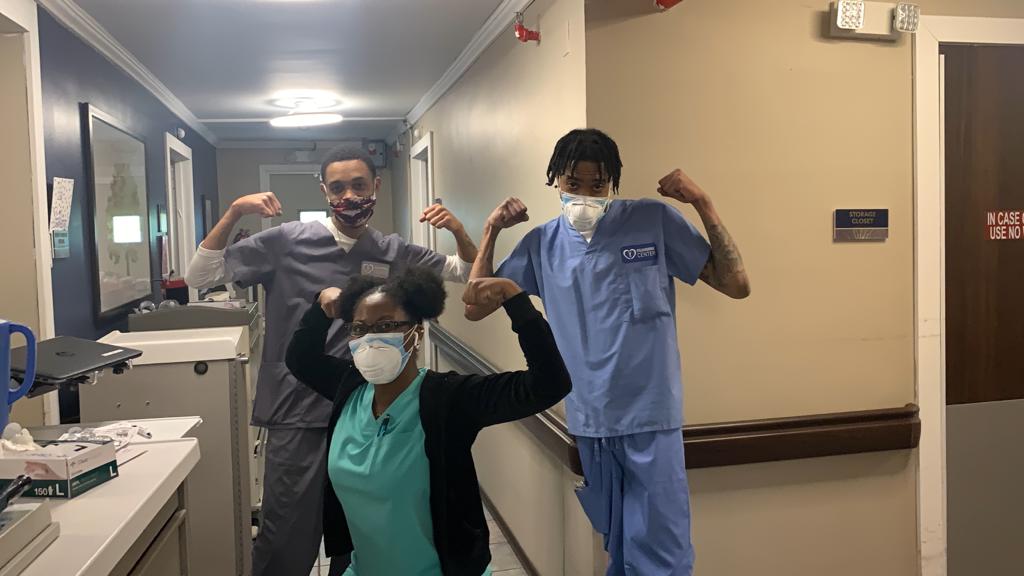
Special Perks for Special Healthcare Workers—Like You.
Take advantage of these special FREE resources now available to healthcare workers and first responders.
Companies across New York and across the country are stepping up to support health care workers who are on the frontlines of the fight against COVID-19. Please explore these resources. Thanks for your hard work. You deserve all the help you get!
Allbirds
Allbirds is donating shoes to the medical community. They’ve already given out $500,000 worth.
Email together@allbirds.com for your free pair of wool runners.
Krispy Kreme
Krispy Kreme is offering anyone in the medical community a dozen doughnuts, free of charge. Valid every Monday through May 11.
“Just go to a Krispy Kreme drive-thru and show us your employer badge. That’s it,” the company said. “Pick up some free dozens on the way to work for you and your colleagues, or maybe a free dozen on your way home to family after a long shift.”
Sweetgreen
Sweetgreen is delivering free salads and bowls to hospital workers.
Hertz Car Rentals
Hertz is offering NYC healthcare workers a free rental car, up to 1 month!
Starbucks Coffee
A free tall hot or iced brewed coffee to anyone that identifies themselves as a COVID-19 front line responder through May 3rd.
Uber Eats
Uber Eats has pledged to give 300,000 free meals to first responders and health care workers.
Four Seasons Hotel
The Four Seasons Hotel on 57th Street will provide FREE lodging to doctors, nurses & medical personnel currently working to respond to the pandemic.
The hotel, like many, is closed due to COVID-19 until 4/15. But healthcare workers can call the hotel at 212-758-5700 to book a free room.
Crocs Shoes
Get a free pair of crocs to help you, while you help us alot.
AirBnb
Providing health care professionals, relief workers and first responders free or subsidized housing.
Childcare
Westchester Childcare
All school districts in Westchester County are now providing childcare for children ages 5 to 12 for healthcare workers and first responders with no other childcare options.
New York City Childcare
Regional Enrichment Centers—places where the children of front-line workers can be safely cared for while their parents continue to serve the city in this time of need.
Long Island Childcare
Emergency childcare is available for residents of Nassau and Suffolk County.
For more special perks and discounts, click here.
How to use Facetime to talk to friends and loves ones
How to use Facetime to talk to friends and loves ones
Available to iPhone and iPad users
- In the Facetime app, tap the plus button and type the person’s phone number or email address.
- Tap the number or address, then tap Audio or Video.
- If you have the person’s phone number or email address saved in your contacts, you can start typing their name and tap the name when it appears.
Once you have made the call, the next time you open the app, their name will appear when you open the app. Simply tap on their name.
How to use WhatsApp to talk to your loved ones
How to use Whatsapp to talk to your loved ones
Simple:
- Install Whatsapp on your phone.
- Tap on Whatsapp.
- Tap on the contact you want to call.
- Tap on the movie camera icon.
- You’re on!
How to use Skype to talk to friends and loved ones
How to use Skype to talk to friends and loved ones.
- Check for a webcam.Be sure your computer has a webcam. On most laptops, the webcam will look like a small hole in the top border of the screen.
- Install Skype.Depending on whether or not you have a Mac or a PC, the download link is different.
- For Windows users:Go to this link: http://www.skype.com/en/download-skype/skype-for-computer/. Click on the green button that says, “Get Skype for Windows Desktop.”
- For Mac users:Go to this link: http://www.skype.com/en/download-skype/skype-for-mac/. Click on the green button that says, “Get Skype for Mac.”
- Follow installer instructions.The Skype download should start automatically and the installer will guide you through how to install the program.
- Open Skype.After the program is finished installing, open up Skype. If you have trouble finding the program, follow these instructions for Mac or PC.
- For Windows users:Press your Windows key (left of Alt key), type “Skype” and press ↵ Enter.
- For Mac users:Open up Finder, search for “Skype,” then click on the program
- Click on a contact.In the left side of your screen, you will see a list of contacts if you have added any. Click on the name to open up a conversation with that person.
- If you haven’t added any contacts, you will first have to add at least one. Ask for a friend’s Skype ID, click Contacts in the upper left of the window, click Add Contact in the dropdown menu, then type your friend’s Skype ID.
- Start a video call.To start a video call, you must first be in a conversation with a contact. The instructions are slightly different for Mac and PC users.
- For Windows users:Click on the icon in the upper right corner of the window that looks like a video camera. It should be a blue circle with a white video camera inside.
- For Mac users:Click on the icon in the upper right corner of the window that looks like a video camera. It should be a green circle with a white video camera inside. Depending on your version of Skype, the icon may instead simply say, “Video Call.”
- You may be asked for permission for Skype to use your video camera, click “Allow” if you are comfortable with Skype having access to your camera.
- End the call when done.End the call by pressing the red button on the bottom of the video call window. The icon looks like a red circle with a white phone inside of the circle.
- You may need to move your cursor around the inside of the video call window to reveal the hang-up button.
Coronavirus Notice:
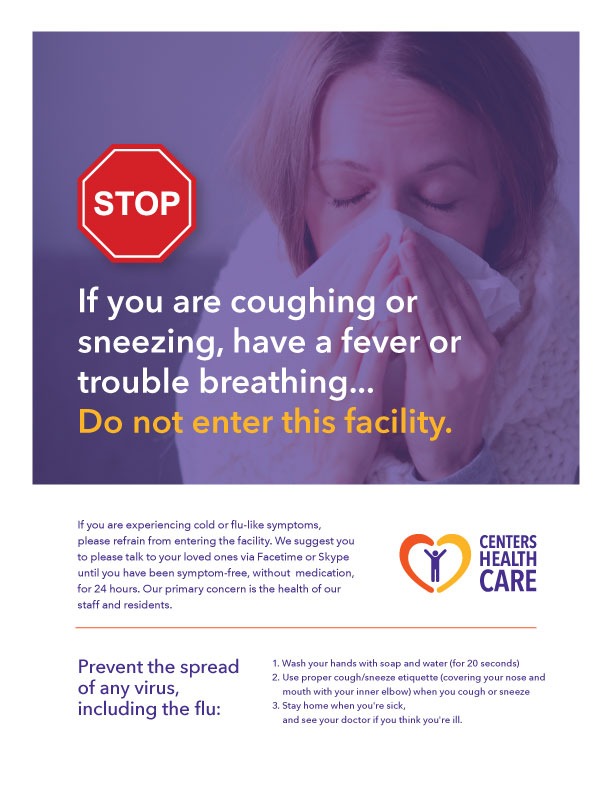
Boro Park Center Encourages Online Ordering for Convenience
It’s difficult to deny that there’s a difference in comfort with, and familiarity with, technology between generations. Perhaps it is for this reason that we sometimes unnecessarily separate technological convenience from the retirement and long-term care atmosphere like that at Boro Park Center for Rehabilitation and Nursing. In many ways, however, modern technology, and online services in general, can be of valuable benefit to the long-term care experience by eliminating some of the need for physical travel by either patients or their loved ones.
Ideally, we would all like to visit our loved ones in long-term care facilities as often as possible. The demands of our hectic lives can sometimes make that an unwieldy challenge, however. Additionally, sometimes social visits and visits of logistical necessity are not always the same thing. For instance, you may be browsing some online shopping site in your own home late one evening shortly after visiting a loved one at a long-term care facility when you spy the perfect product for them.
If your loved one is comfortable using online services, ordering products for themselves online can reduce the necessity to involve a third party (like you) when it is not convenient. If they’d prefer not to deal with electronic transactions, online ordering can allow you to directly ship the items to them while saving both shipping time and travel time for you. Electronic telecommunications already allow us to stay more connected to our loved ones in long-term care facilities when we cannot visit as often as we’d like, but online ordering services also allow us to ensure that they are delivered those consumer products they require when they need them while saving us the stress of making sure we acquire and deliver them.
To learn more about the Boro Park Center for Rehabilitation and Nursing and all of the services they offer, visit https://centershealthcare.com/boro_park_center.
Boro Park Acknowledges the Growing Need for Cultural Consideration
Though the country may arguably still have a long road ahead before reaching a state of true equality, Boro Park Center for Rehabilitation and Nursing is happy to be a part of the national trend toward cultural sensitivity. The simple elimination of segregation, outright discrimination, and hostility is not sufficient for creating a comfortable and inclusive environment for all deserving seniors; it is also our duty to consider the subtler ways in which we can recognize and respect the diversity and cultures of our incoming patients.
Ethnic, cultural, and religious diversity in the United States continues to evolve to the point that the concept of “minority” now has a different meaning in our country. As our nation faces the beginning of the greatest swell in the elderly population in history, we are also simultaneously witnessing the greatest ethnic, cultural, and religious diversity we’ve ever known. While it is true that the aging are not currently the most diverse demographic in our society, that group is more diverse than it has ever been before, and they have enjoyed a much broader network of diversity in their lives.
All of this diversity means that our public and private service institutions must have a greater awareness of and appreciation for cultural differences. This affects not only the way that we treat individuals directly, but also the activities we plan, the holidays that we do and don’t observe, and the references and assumptions that we make when interacting with our patients. Keeping abreast of cultural values, histories, and current events can help us better forge meaningful and therapeutic relationships with our patients.
Age is a universal equalizer, and we find that our elderly patients have much more in common than that which they don’t. They also all have the same right to comfort, warmth, and familiarity. This extends not only to a lack of overt discrimination, but also to a thoughtful sensitivity for the elements of the long, rich, and complex lives they’ve led before arriving at our doors.
To learn more about Boro Park Center for Rehabilitation and Nursing and all of the services they offer, visit https://centershealthcare.com/boro_park_center.
Study: Sitting in Front of the TV for Prolonged Periods of Time Dangerous for Seniors
Did your parents tell you, or did you ever tell your children, that television will rot your brain?
Turns out, that may not be far from the truth – for seniors, at least.
The study by George Washington University was conducted over a 10-year period, and found that a sedentary lifestyle with low physical activity and increased TV watching sharply increases the risk of a walking disability.
After the 10-year study period concluded, 30 percent of those 50 to 71 years old at the time the study began reported that they developed a walking disability. Researchers found that the more time those people spent watching television was “significantly related to increased disability within all levels of physical activity.” Those who reported less than three hours of physical activity per week were at even greater risk for a mobility issue.
At the same time, this study showed that a general sedentary lifestyle is the second-leading risk factor to mortality, only trailing smoking.
This is why we take activities seriously at New Paltz Center for Nursing and Rehabilitation. We offer a variety of activities for residents, including exercise programs, games, and trips, to promote as much movement as possible for each of our residents.
Prolonged sitting has been found to likely to particularly raise the risk of diabetes and cardiovascular disease.
The study did not come up with a certain amount of time that they believe to be too much regarding TV watching. However, experts recommend at least 30 days of moderate exercise for a healthy adult. If you are looking to get more active, always talk to your doctor before starting a fitness regimen.
Parkinson’s Disease 101 – What is Parkinson’s Disease and how can it be treated?
Today, April 11th is World Parkinson’s Day. British doctor James Parkinson first discovered Parkinson’s disease exactly 200 years ago in 1817. He published an article titled “Essay on the Shaking Palsy” that described the symptoms of the disease that would be named after him. Sadly, Dr. Parkinson was not able to discern an exact cause or a cure the disease, a question that scientists and doctors are still trying to find answers for 200 years later. Some researchers believe that Parkinson’s is genetic like other diseases. Other researchers believe that Parkinson’s may have been caused by a viral infection or an adverse reaction to environmental toxins like pesticides.
Parkinson’s disease affects millions worldwide, impacting mostly the elderly but younger people could still experience symptoms. Famous examples of those that suffer from Parkinson’s disease include actor Michael J. Fox, who had experienced symptoms of early-onset Parkinson’s when he was only in his early 30s, and the late Muhammad Ali, who was diagnosed with Parkinson’s when he was in his 40s due to the repeated blows to the head he experienced throughout his boxing career.
This disease causes irreversible brain cell loss and damage to the central nervous system. The result of this degenerative condition is that less dopamine is produced and the striatum, one of the areas of the brain that coordinates movement, is unable to function properly. Those that suffer from Parkinson’s experience symptoms such as tremors, stiffness, imbalance, and slow movement.
Because there is no cure for Parkinson’s disease, the best way to prevent it from taking over you or your loved one’s life is through treatment. Most treatment options involve restoring the imbalance of neurotransmitters and regulate nervous system operation so your body won’t be making movements against your will. There are several prescription medications that can correct this chemical imbalance. However, if medication is not enough to control symptoms, there are a few surgical procedures that can be an option.
Hopefully one day, we can find a cure for Parkinson’s disease so that surgery or an extensive regime of medication will no longer be necessary for those that have the disease and would like free control over their bodies once more.